RUT Gamma Exposure Dashboard
Track real-time options volume profiles, strike GEX distribution bars, and CBOE market maker hedging requirements for **RUT**.
RUT Equity / ETF · Net GEX & Volatility Boundaries
Underlying RUT
Per 1% Move
Primary Overhead Resistance
Primary Downside Support
Regime Transition Threshold
| Metric Level | RUT Strike | Distance from Spot | Market Maker Role | Volatility Impact |
|---|---|---|---|---|
| RUT Call Wall | $2900.00 | +53.74 pts (+1.89%) | Heavy Call Open Interest Pin / Major Resistance | Dealers Short Calls / Damping Upward Surges |
| RUT Spot Price | $2846.26 | 0.00 pts (Current) | Underlying RUT Equity / ETF Cash Value | Mean-Reverting Intraday Flow |
| RUT Zero Gamma Flip | $2836.00 | -10.26 pts (-0.36%) | Long to Short Gamma Transition Threshold | Volatility Shift Zone (Long GEX → Short GEX) |
| RUT Put Wall | $2800.00 | -46.26 pts (-1.63%) | Heavy Put Open Interest Floor / Primary Support | Dealers Long Puts / Buying Index Futures on Dips |
| 0DTE Intraday Gamma | PRO EXCLUSIVE | Sub-second live streaming | Real-time 0DTE Call/Put Wall migrations & intraday gamma flip alerts | Unlock in Pro ($99/mo) |
RUT Pre-Market Institutional Outlook & Plain-English Interpretation
With RUT spot trading at $2846.26 (above the Zero Gamma Flip of $2836.00), options market makers operate in a Positive Gamma Regime. In this state, dealers are mathematically required to trade counter-trend: buying underlying futures on dips and selling into rallies. This systematic hedging suppresses realized volatility, pinning price action between structural boundaries.
Primary overhead resistance is anchored at the RUT Call Wall ($2900.00), representing a distance of +53.74 pts (+1.89%). Primary institutional downside support rests at the RUT Put Wall ($2800.00), located -46.26 pts (-1.63%) below current price.
Mean-reversion fades at Put Wall touches offer favorable 3:1+ risk-to-reward setups, while rallies into the Call Wall face persistent dealer selling pressure.
Live RUT Net GEX Current Value & 0DTE Breakdown
Explore real-time net dollar gamma levels across all expirations, zero-day contracts, and monthly settlement cycles.
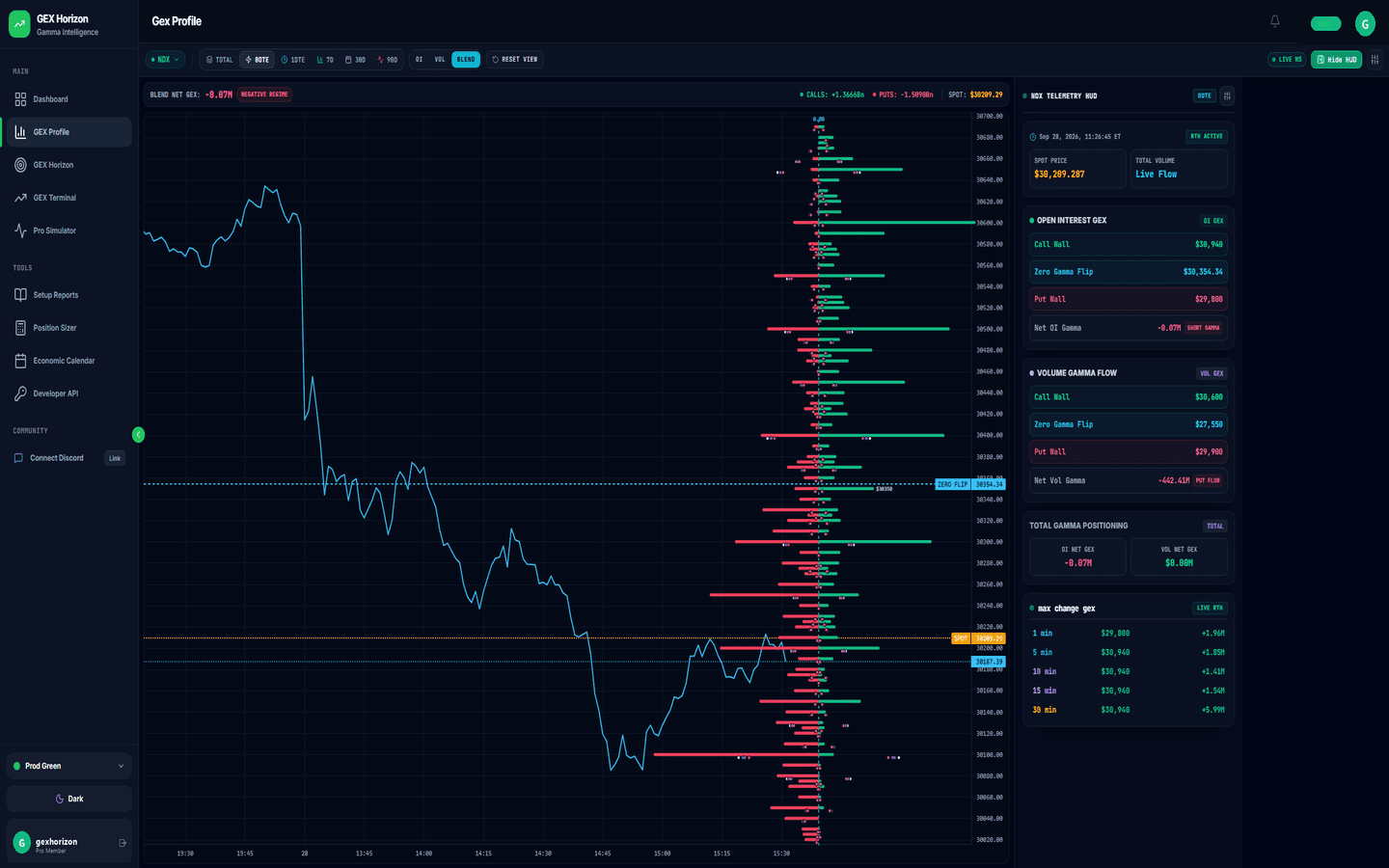
Understanding RUT Options Market Structure & GEX
The options derivatives market for RUT represents a key indicator of institutional positioning and retail sentiment. On any given trading day, thousands of call and put options contracts are exchanged across various expirations. For options market makers who write these contracts, managing inventory risk is a continuous task. Dealer delta hedging in RUT options directly influences intraday price action, volatility, and trend sustainability.
How Dealer Delta Hedging Dynamics Impact RUT
When a trader buys a call option on RUT, the dealer who sold that contract becomes short delta. To hedge this exposure and remain delta-neutral, the dealer must purchase shares of the underlying RUT stock in the open market. As the price of RUT moves, the delta of the option contract changes, requiring the dealer to dynamically adjust their hedge by buying or selling shares. This feedback loop is known as dealer gamma hedging, and it dictates the daily trading boundaries.
The Call Wall, Put Wall, and Zero Flip for RUT
In the RUT options flow, three key levels determine institutional support and resistance:
- RUT Call Wall: The strike price with the largest positive net call option gamma. Market makers must sell shares of RUT to hedge as price approaches this wall, capping price appreciation.
- RUT Put Wall: The strike price with the largest negative net put option gamma. It serves as a major floor because dealers buy RUT shares to hedge as price falls near it.
- RUT Zero Gamma Flip: The boundary level separating positive and negative gamma regimes. Above the flip, dealers buy dips and sell rallies (dampening volatility). Below the flip, dealers sell declines and buy rallies (accelerating volatility).
0DTE Options Flow and Intraday Volatility in RUT
With the rise of 0DTE (Zero Days to Expiration) option contracts, intraday swings in RUT are increasingly driven by short-term delta rebalancing. Large blocks of call or put options bought in the morning can shift the RUT net GEX value by millions of dollars, leading to rapid trend accelerations or sudden price pins at key strikes. Monitoring these volatility shifts allows derivatives traders to identify short-term reversals and momentum breakouts.